Patient Stories

These touching stories reflect the unwavering dedication of our lifesaving crews and healthcare partners, and the resilience and strength of our patients.

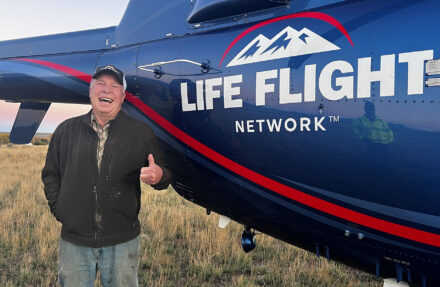
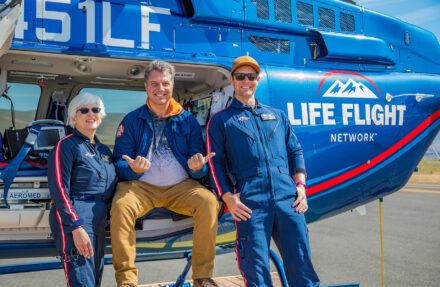
An adult stands outdoors beside the side of a blue Life Flight Network helicopter, giving a thumbs-up gesture. The helicopter’s fuselage fills most of the frame, with the “Life Flight Network” logo and mountain graphic clearly visible against a grassy field and open sky.
When a tractor fire left Larry with severe burns, Life Flight Network’s swift response ensured he received specialized burn care. After a month of recovery, he returned to ranching, music, and his community—grateful for the neighbors and crews who helped save his life.
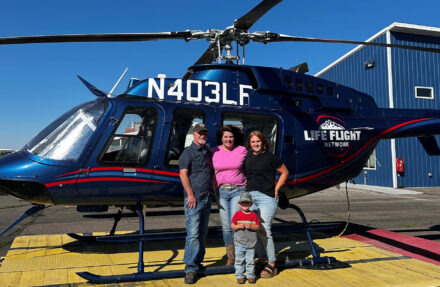
Four people pose on a helipad in front of a blue Life Flight Network helicopter with the registration number N403LF visible on the fuselage. Three adults stand side by side near the helicopter’s landing skids, while a small child stands in the foreground. The helicopter’s rotor blades, windows, and medical transport branding are visible, with a blue hangar and clear sky in the background.
After a four-wheeler accident left Laura Jones with brain bleeds and multiple fractures, Life Flight Network flew her from remote Almo, Idaho, to definitive care. “Life Flight saved my life,” Laura says. Her story highlights the vital role of air medical care in rural communities.

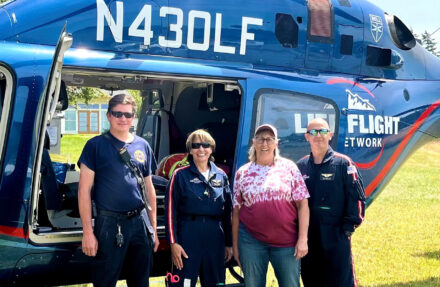
Four adults stand on a grassy area beside an open blue medical helicopter marked with “Life Flight Network” branding and registration number N430LF. The helicopter’s side door is open, showing part of the interior, with the fuselage, windows, and landing skids visible in bright daylight.
A fall from a ladder left Sue with a spinal fracture on remote Lopez Island. Life Flight Network flew her to care in just 12 minutes—a transfer that could have taken hours by ferry. “Life Flight was there when it mattered most,” Sue says.
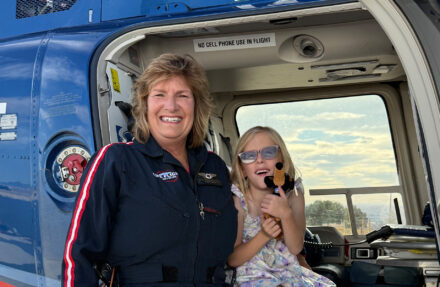
An adult stands at the open side door of a blue medical helicopter alongside a child seated just inside the doorway. The helicopter interior, door frame, and exterior fuselage are visible, with a safety sign above the doorway reading “NO CELL PHONE USE IN FLIGHT,” and daylight visible through the opposite windows.
Born at just 24 weeks, Avah’s survival depended on two Life Flight Network crews. From Lewiston to Spokane, including the NEST team’s NICU-level care, she was safely delivered to the specialty care she so desperately needed.
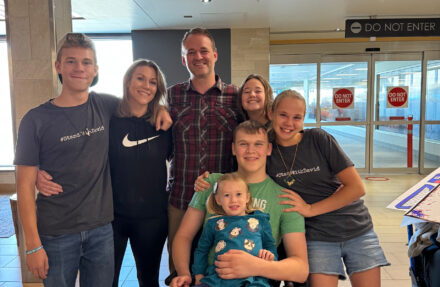
Seven people of varying ages pose together indoors near sliding glass doors at a building entrance. Visible signage on the doors reads “Do Not Enter,” and the group stands closely with arms around one another, while one child sits in front. The setting appears well lit with tiled floors and posted informational signs nearby.
A flip gone wrong left 16-year-old David Sample with a serious spinal cord injury. Life Flight Network crews worked in tandem to get him to lifesaving care—starting a recovery journey fueled by hope and determination.
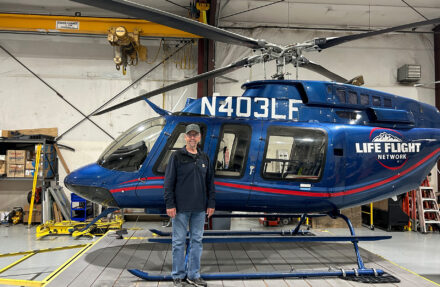
An adult stands inside an aircraft maintenance hangar in front of a blue Life Flight Network helicopter with registration markings visible on the tail boom. The helicopter rests on its skids with rotor blades overhead, and tools, equipment, and storage shelves are visible in the background of the hangar.
After six minutes of CPR brought Jerry back from cardiac arrest, Life Flight Network’s Coeur d’Alene crew ensured his survival with a rapid flight to Providence Sacred Heart’s Cath Lab. Now fully recovered, Jerry says, “I’m so lucky to still be here.”
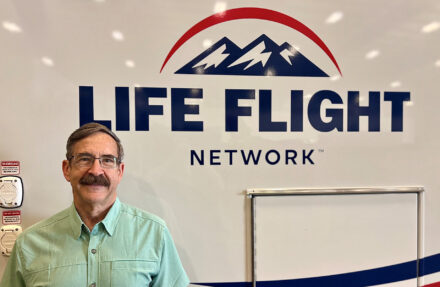
An adult stands indoors in front of a white wall displaying the “Life Flight Network” logo with a mountain graphic. Part of a metal railing or equipment frame is visible below the logo, and wall-mounted fixtures appear to the left.
When 67-year-old James Ryan suffered a severe heart attack while hiking, every second counted. Life Flight Network’s rapid response and expert care ensured he reached advanced cardiac care in time—giving him the chance to survive and return to the active life he loves.
Two adults stand on a paved helipad in front of a blue Life Flight Network helicopter with registration markings visible on the fuselage. The helicopter’s side door, windows, landing skids, and medical transport branding are clearly visible in bright daylight.
Kyle Richards was diagnosed with a benign brain tumor at age nine and has faced over a dozen surgeries since. In 2018, Life Flight Network provided urgent air medical transport for a shunt failure, delivering him to specialized care and giving him a second chance at life.
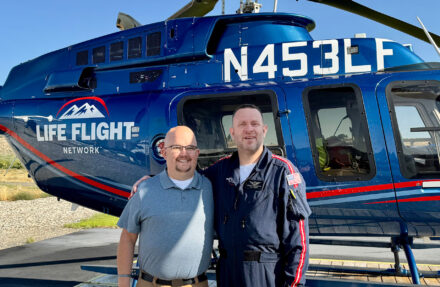
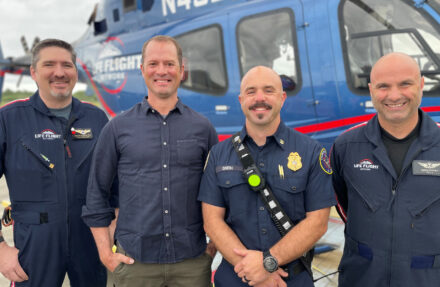
Four adults stand shoulder to shoulder in front of a blue Life Flight Network helicopter on an airfield. The helicopter’s windows, rotor mast, and medical transport branding are visible in the background, and several of the individuals wear flight or emergency services uniforms.
When a chainsaw accident left Eric Shoemaker bleeding and stranded deep in the Oregon brush, reaching help seemed impossible. Thanks to swift action from local first responders and Life Flight Network, he was at a trauma center within an hour—a powerful reminder of the difference rapid air medical transport can make.
Three people stand and sit at the open side door of a blue medical helicopter marked “Life Flight Network” on an airport tarmac. Medical equipment is visible inside the aircraft, and the helicopter’s exterior, rotor housing, and landing surface are clearly shown in bright daylight.
After a devastating collision on Mt. Hood left him with life-threatening injuries, photographer Richard Hallman was rescued by Life Flight Network. Now nearly recovered, he reflects on the experience with gratitude—and a renewed respect for the mountains that almost took his life.
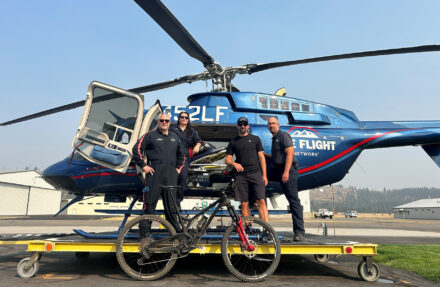
Four people stand on a wheeled platform in front of a blue medical helicopter with its door open on an airport tarmac. A muddy mountain bike is positioned in the foreground, with the helicopter’s rotors, windows, and medical transport branding visible in the background.
A mountain biking trip turned dangerous when Josh Anderson’s leg was impaled by a branch. Thanks to quick action from paramedics, Life Flight Network, and surgeons in Spokane, his leg—and life—were saved.
Emelie hugging a Life Flight Network crew member in front of a blue Life Flight Network helicopter on the tarmac outside a hangar.
Emelie’s life changed in the blink of an eye, and she credits Life Flight Network with her survival and her newfound self-belief.
An adult stands outdoors beside the side of a blue Life Flight Network helicopter, giving a thumbs-up gesture. The helicopter’s fuselage fills most of the frame, with the “Life Flight Network” logo and mountain graphic clearly visible against a grassy field and open sky.
When a tractor fire left Larry with severe burns, Life Flight Network’s swift response ensured he received specialized burn care. After a month of recovery, he returned to ranching, music, and his community—grateful for the neighbors and crews who helped save his life.
Four people pose on a helipad in front of a blue Life Flight Network helicopter with the registration number N403LF visible on the fuselage. Three adults stand side by side near the helicopter’s landing skids, while a small child stands in the foreground. The helicopter’s rotor blades, windows, and medical transport branding are visible, with a blue hangar and clear sky in the background.
After a four-wheeler accident left Laura Jones with brain bleeds and multiple fractures, Life Flight Network flew her from remote Almo, Idaho, to definitive care. “Life Flight saved my life,” Laura says. Her story highlights the vital role of air medical care in rural communities.
Four adults stand on a grassy area beside an open blue medical helicopter marked with “Life Flight Network” branding and registration number N430LF. The helicopter’s side door is open, showing part of the interior, with the fuselage, windows, and landing skids visible in bright daylight.
A fall from a ladder left Sue with a spinal fracture on remote Lopez Island. Life Flight Network flew her to care in just 12 minutes—a transfer that could have taken hours by ferry. “Life Flight was there when it mattered most,” Sue says.
An adult stands at the open side door of a blue medical helicopter alongside a child seated just inside the doorway. The helicopter interior, door frame, and exterior fuselage are visible, with a safety sign above the doorway reading “NO CELL PHONE USE IN FLIGHT,” and daylight visible through the opposite windows.
Born at just 24 weeks, Avah’s survival depended on two Life Flight Network crews. From Lewiston to Spokane, including the NEST team’s NICU-level care, she was safely delivered to the specialty care she so desperately needed.
Seven people of varying ages pose together indoors near sliding glass doors at a building entrance. Visible signage on the doors reads “Do Not Enter,” and the group stands closely with arms around one another, while one child sits in front. The setting appears well lit with tiled floors and posted informational signs nearby.
A flip gone wrong left 16-year-old David Sample with a serious spinal cord injury. Life Flight Network crews worked in tandem to get him to lifesaving care—starting a recovery journey fueled by hope and determination.
An adult stands inside an aircraft maintenance hangar in front of a blue Life Flight Network helicopter with registration markings visible on the tail boom. The helicopter rests on its skids with rotor blades overhead, and tools, equipment, and storage shelves are visible in the background of the hangar.
After six minutes of CPR brought Jerry back from cardiac arrest, Life Flight Network’s Coeur d’Alene crew ensured his survival with a rapid flight to Providence Sacred Heart’s Cath Lab. Now fully recovered, Jerry says, “I’m so lucky to still be here.”
An adult stands indoors in front of a white wall displaying the “Life Flight Network” logo with a mountain graphic. Part of a metal railing or equipment frame is visible below the logo, and wall-mounted fixtures appear to the left.
When 67-year-old James Ryan suffered a severe heart attack while hiking, every second counted. Life Flight Network’s rapid response and expert care ensured he reached advanced cardiac care in time—giving him the chance to survive and return to the active life he loves.
Two adults stand on a paved helipad in front of a blue Life Flight Network helicopter with registration markings visible on the fuselage. The helicopter’s side door, windows, landing skids, and medical transport branding are clearly visible in bright daylight.
Kyle Richards was diagnosed with a benign brain tumor at age nine and has faced over a dozen surgeries since. In 2018, Life Flight Network provided urgent air medical transport for a shunt failure, delivering him to specialized care and giving him a second chance at life.
Four adults stand shoulder to shoulder in front of a blue Life Flight Network helicopter on an airfield. The helicopter’s windows, rotor mast, and medical transport branding are visible in the background, and several of the individuals wear flight or emergency services uniforms.
When a chainsaw accident left Eric Shoemaker bleeding and stranded deep in the Oregon brush, reaching help seemed impossible. Thanks to swift action from local first responders and Life Flight Network, he was at a trauma center within an hour—a powerful reminder of the difference rapid air medical transport can make.
Three people stand and sit at the open side door of a blue medical helicopter marked “Life Flight Network” on an airport tarmac. Medical equipment is visible inside the aircraft, and the helicopter’s exterior, rotor housing, and landing surface are clearly shown in bright daylight.
After a devastating collision on Mt. Hood left him with life-threatening injuries, photographer Richard Hallman was rescued by Life Flight Network. Now nearly recovered, he reflects on the experience with gratitude—and a renewed respect for the mountains that almost took his life.
Four people stand on a wheeled platform in front of a blue medical helicopter with its door open on an airport tarmac. A muddy mountain bike is positioned in the foreground, with the helicopter’s rotors, windows, and medical transport branding visible in the background.
A mountain biking trip turned dangerous when Josh Anderson’s leg was impaled by a branch. Thanks to quick action from paramedics, Life Flight Network, and surgeons in Spokane, his leg—and life—were saved.
Emelie hugging a Life Flight Network crew member in front of a blue Life Flight Network helicopter on the tarmac outside a hangar.
Emelie’s life changed in the blink of an eye, and she credits Life Flight Network with her survival and her newfound self-belief.

Emergency Dispatch

EMS and Hospital Personnel:
For immediate emergency dispatch, call us 24/7. We’re standing by.

OR, WA, ID, MT
DISPATCH
HAWAI’I
DISPATCH
There.
When You Need Us.
Life Flight Network