
On a crisp fall day near his home in Cannon Beach, Oregon, avid outdoorsman and hunter Eric Shoemaker set out to clear overgrown trails. It was a task he had done countless times before, but this time, he broke one of his own cardinal rules.
Eric picked up his chainsaw without putting his safety goggles back on. As he cut at an awkward angle, the saw kicked back violently, striking his face. The blow left him bleeding profusely and barely able to see.
With no time to dwell on the pain, Eric faced an even greater challenge—his location. He was deep in what he described as “impenetrable brush” with no road access and no cell reception. Summoning his strength, he climbed 200 meters through the thick undergrowth to reach a clearing where he could call for help.
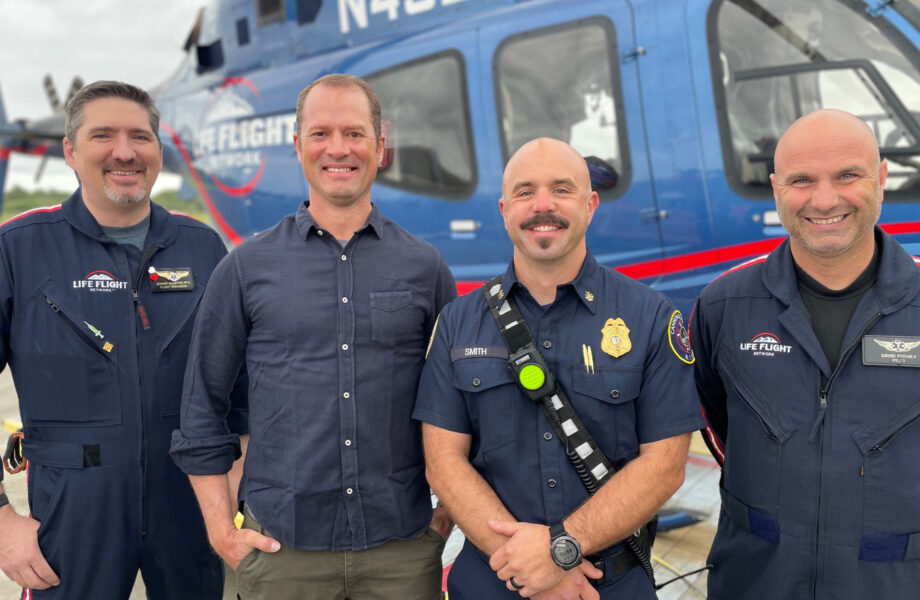
First responders from both Hamlet and Cannon Beach Rural Fire Protection Districts quickly arrived. Recognizing the severity of his injuries and the remote location, they immediately activated Life Flight Network.
“The flight crew arrived, and Eric was on his way to the hospital within minutes,” said Jason Smith, Cannon Beach RFPD Deputy Fire Chief. “That’s the benefit of air medical. As first responders, we need to be patient advocates and increase the possibility of positive outcomes. How can we get the patient to the most appropriate definitive care—the best treatment from the start? That’s our trigger point to activate LFN.”
Life Flight Network’s crew stabilized Eric, managing his pain and keeping him comfortable as they flew him directly to Legacy Emanuel Medical Center in Portland. There, trauma surgeons treated his severe facial wounds. Miraculously, his eye was uninjured.
“Had my eye been compromised—which we all thought it was—speed is everything in these situations,” Eric said. “The seamless transport from a very remote location to a Level I trauma center was amazing. From the bottom of a clear cut to Legacy Emanuel in an hour.”
Today, Eric’s gratitude extends beyond words. He is a huge supporter of his local fire departments and EMS and continues to emphasize the importance of rapid response and specialized care.
His story is a testament to the seamless teamwork between first responders, air medical crews, and trauma specialists—and a powerful reminder that in the most critical moments, what matters most is that help arrives—when it’s needed most.
